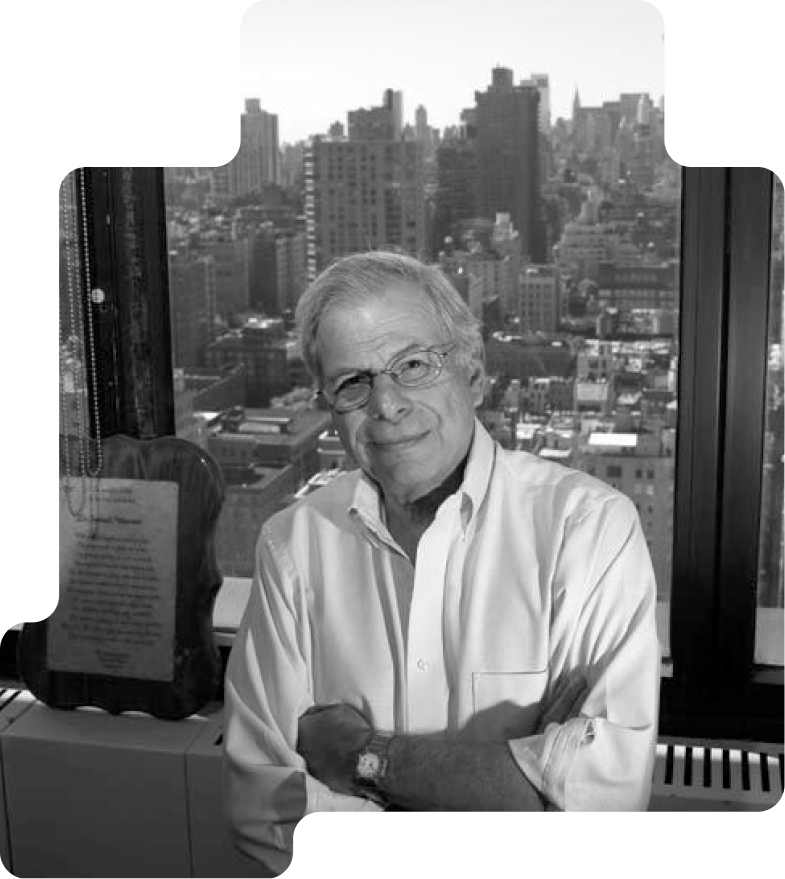
The Samuel Waxman Institute for Aging & Cancer, an affiliate of The Mark Foundation for Cancer Research, represents the culmination of five decades of leadership in cancer research by the Samuel Waxman Cancer Research Foundation (SWCRF). Built on a strong foundation of global collaboration, scientific innovation, and translational impact, the Waxman Institute is dedicated to advancing research at the intersection of aging and cancer.
It is increasingly clear that cancer is fundamentally a disease of aging. Cancer incidence rises sharply after age 50, and the rapid growth of older adult populations presents an urgent global public health challenge. Recognizing this reality, SWCRF made aging and cancer research a strategic priority and positioned the Foundation at the forefront of this rapidly expanding field.
In 2018, SWCRF launched the International Network on Aging and Cancer, bringing together government agencies, academic institutions, pharmaceutical partners, philanthropies, and research organizations worldwide. By pairing scientists studying the biology of aging with those focused on oncology, the Network established a collaborative framework to advance prevention and treatment strategies.
One of the Network’s earliest initiatives, the Partnership for Aging and Cancer Research Program, connected investigators from the National Cancer Institute (NCI) and the National Institute on Aging (NIA) with external research teams. These interdisciplinary collaborations focused on uncovering shared biological mechanisms between aging and cancer and identifying approaches to reduce cancer risk and improve patient outcomes.
In 2020, SWCRF expanded its global footprint by co-founding the International Center for Aging and Cancer in Hainan, China, in partnership with Hainan Medical University and Ruijin Hospital of Shanghai Jiao Tong University School of Medicine. The Center was established to pursue basic and translational research, foster international collaboration, and train the next generation of scientists.
That same year, SWCRF also partnered with Wiley Publishing to launch Aging and Cancer, the first peer-reviewed journal dedicated exclusively to research exploring the biological links between aging and cancer. The journal provides a global platform for sharing discoveries and shaping the direction of this evolving field.

In 2023, the International Network on Aging and Cancer was further strengthened through new partnerships with leading research and funding organizations, including The Mark Foundation, the Israel Cancer Research Fund, Albert Einstein College of Medicine, the Melanoma Research Alliance, and the Icahn School of Medicine at Mount Sinai.
The Institute’s work is rooted in the legacy of Samuel Waxman, M.D., who founded the Samuel Waxman Cancer Research Foundation in 1976 with a bold mission: to eradicate cancer through collaborative, cross-institutional research focused on the genetic and biological drivers of disease and the development of minimally toxic treatments. Over the ensuing decades, SWCRF became a pioneer in global scientific partnerships, especially through the SWCRF Institute Without WallsTM, a network that connected the brightest scientific minds around the world to share their expertise and recent research findings to accelerate the pace toward important breakthroughs.
Today, the Samuel Waxman Institute for Aging & Cancer carries forward this mission: Foster collaboration. Accelerate discovery. Cure cancer.
Today, 95 percent of people diagnosed with acute promyelocytic leukemia (APL) are cured without the need for chemotherapy—an extraordinary achievement made possible by decades of collaboration led by Dr. Samuel Waxman and scientific partners in China.
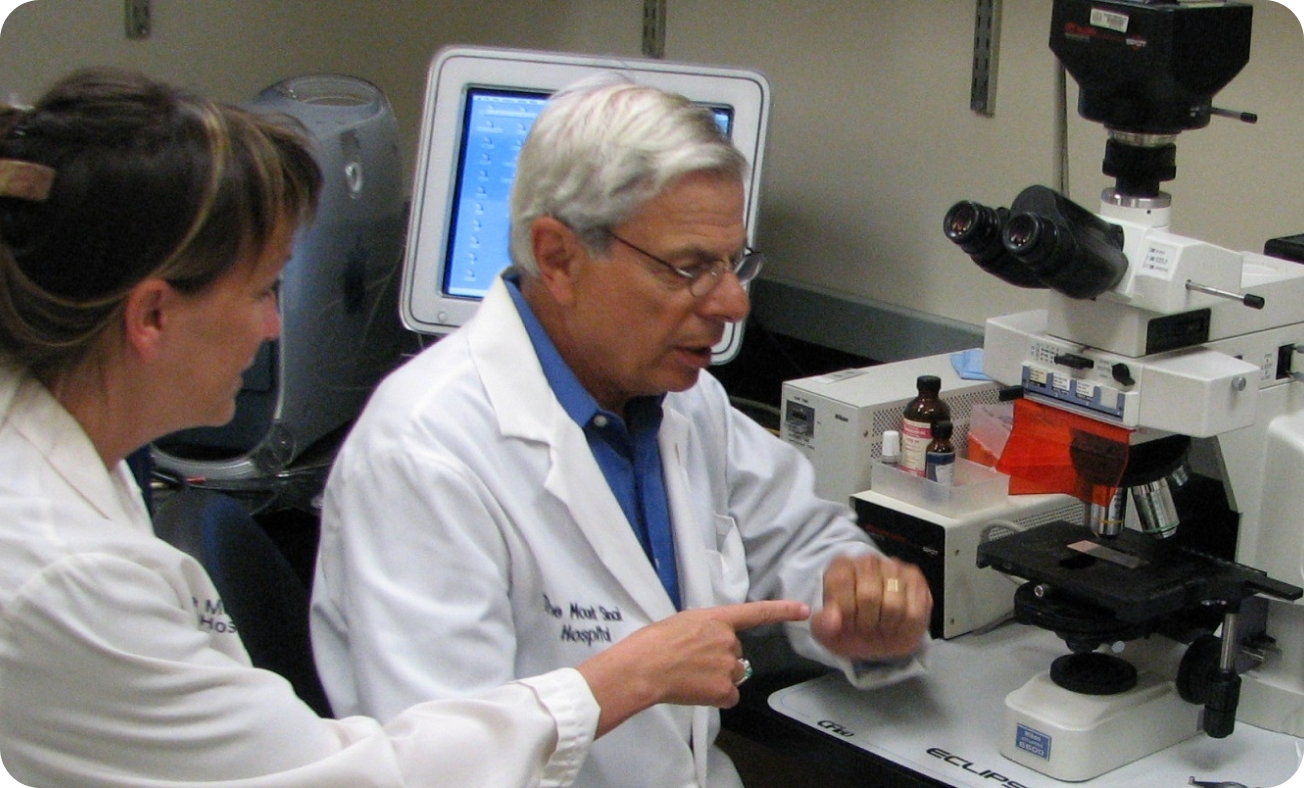
This breakthrough began in the late 1970s when Dr. Waxman launched one of the earliest research partnerships between the United States and China. Visiting scientists from Shanghai Second Medical University trained in his laboratory at the Icahn School of Medicine at Mount Sinai, learning emerging concepts in cell differentiation and cellular reprogramming. With support from the Samuel Waxman Cancer Research Foundation (SWCRF), they brought this knowledge—and essential research tools—back to China.
In the early 1980s, Dr. Waxman and Dr. Wang Zhen Yi, Director of the Shanghai Institute of Hematology, developed a bold strategy: use trans-retinoic acid, a vitamin A derivative, to restore normal cell maturation in APL. Dr. Wang’s team soon treated 15 patients using the compound available in China, and every patient went into remission.
Building on this success, Dr. Waxman and Dr. Zhu Chen later explored arsenic trioxide, a natural compound long used in Chinese medicine. For patients who did not respond to retinoic acid alone, arsenic trioxide proved highly effective—both normalizing leukemia cells and eliminating malignant ones.
By combining retinoic acid and arsenic trioxide, SWCRF-supported research established the treatment that now cures the vast majority of APL patients worldwide. What was once one of the most lethal forms of leukemia has become one of the most curable—an enduring legacy of scientific partnership and innovation.

1970
1970
Isolation and characterization of an abnormal vitamin B12 binding protein produced by liver cancer.
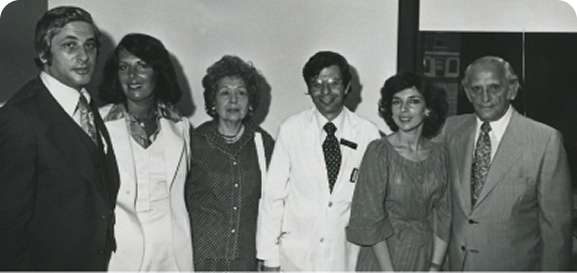
Isolation and characterization of an abnormal vitamin B12 binding protein produced by liver cancer.
1976
1978
Isolation and characterization of an abnormal vitamin B12 binding protein produced by liver cancer.
1980
1980
Demonstration that a folic acid derivative can improve the clinical efficacy of a chemotherapeutic agent in the treatment of colon cancer, which is still in use today.
We reported on the principles for combing differentiation agents in the treatment of cancer.
1980
1982
Collaboration with the Shanghai Second Medical University and Shanghai Institute of Hematology begins.
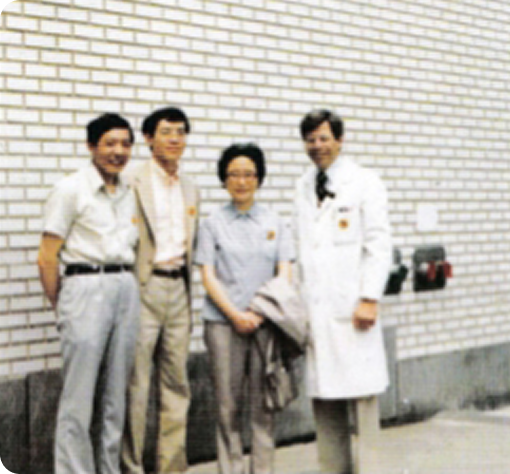
Organized the first of 14 Conferences on Differentiation Therapy of Cancer.
1986
1988
Design of combination cytotoxic-differentiation therapy.
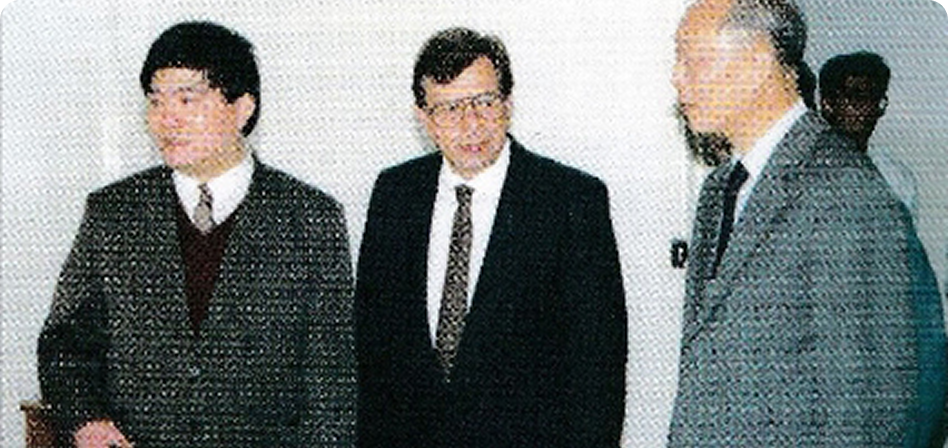
Differentiation therapy with retinoic acid resulted in complete remission in patients with promyelocytic leukemia, a treatment still in use today.
1988
1989
Demonstration that breast cancer cells can be made to undergo differentiation in the laboratory.
1990
1992
Demonstration of a mechanism which blocks gene expression and causes leukemia.
Cloning of the PLZF gene and mechanism whereby it blocks the response to retinoic acid treatment of acute promyelocytic leukemia.
1993
1994
Identification of agents that can enhance retinoic acid differentiation therapy.
Samuel Waxman receives Honorary Professorship from the Shanghai Second Medical University and the Magnolia Award from the Shanghai Municipal Government for contributions to the treatment of leukemia.
1996
1997
Use of arsenic trioxide as a targeted treatment for acute promyelocytic leukemia, a procedure that is still in use today.
Demonstration that breast cancer is associated with abnormal vitamin A gene function.
1997
1998
Laboratory reports that combining a chemotherapeutic agent with a differentiation agent is effective in colon cancer. Subsequent clinical trials demonstrate feasibility and safety.
Tumor dormancy is created in the laboratory by a single gene insertion.
1998
2000
2000
Laboratory report demonstrating the effectiveness of a combination cytotoxic differentiation therapy with interferon and a non-steroidal anti-inflammatory agent blocks growth of human colon carcinoma cells.
Identification of a differentiation associated gene, which can be used as gene therapy in patients with lung cancer.
2001
2003
The SWCRF launched programs on abnormal gene expression in blood malignancies, tumors dormancy, and liver cancer.
Demonstration that a specific mutation in lung cancer may predict whether blocking EGF receptor may be helpful to treat lung cancer (will be done in all lung cancers in the near future).
2004
2005
Discovery of a switch that allows cancer cells to become both dormant and chemotherapy resistant.
Discovery of a novel target for Bortezomib, useful in treating lymphoma and breast cancer.
2005
2005
Discovery of the hPNPase gene, a regulator of normal and cancer cell differentiation and senescence.
Report that inhibitors that block NF-kB enhance the effect of chemotherapy and radiation.
2005
2005
NQ01 serves as a gatekeeper for protein removal, a new cancer-specific target.
Report of a set of genes that separates pre-liver cancer from liver cancer.
2005
2005
Discovery of inhibitors that selectively kill melanoma cells with the B-Raf mutation.
Demonstration that combining arsenic with Gleevac is more effective in treating the aggressive phase of chronic myelogenous leukemia.
2005
2007
Development and implementation of a window of opportunity trial platform to validate in human cancers the same pathways uncovered in the laboratory.
2010
2010
Designed and implemented a robotic-based platform resource for linking cancer mutations to response or resistance to novel anti-cancer drugs.
Developed a therapy to block metastasis formation.
2011
2013
Funded research discovers first medical treatment that improves survival rates for liver cancer
Collaborating SWCRF researchers discover mutated enzymes that cause Intrahepatic cholangiocarcinoma, a deadly liver cancer.
2014
2014
SWCRF scientists win international joint grant for AML research from Israel and China.
SWCRF researchers identify a microRNA that promotes the onset of CML and Down Syndrome AML.
2015
2016
SWCRF celebrates awarding nearly $90 million in cancer research grants to 200 scientists throughout the world over 40 years.
SWCRF holds its first special workshop focused on aging and cancer
2016
2016
The Partnership for Aging and Cancer Research Program launches as a two-year collaboration with the SWCRF, National Cancer Institute, and National Institute on Aging.
Established the International Center for Aging and Cancer in Hainan China
2019
2020
2022
Launches Aging AND Cancer Journal in partnership with Wiley Publishing
Funded research leads to new drug treatment for non-small lung cancer driven by KRAS mutation
2022
2023
First workshop on aging and cancer held in partnership with The Mark Foundation for Cancer Research
Announced $3.1 million in new aging and cancer grants with The Mark Foundation for Cancer Research, Israel Cancer Research Fund, Albert Einstein College of Medicine, Melanoma Research Alliance, and Ichan School of Medicine at Mount Sinai
2024
2025
Establish the Samuel Waxman Institute on Aging & Cancer at The Mark Foundation
In partnership with The Mark Foundation, organizations commit to $15 million in aging/cancer research over first three years
2025