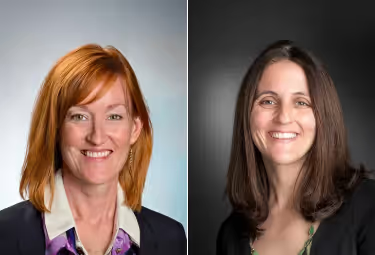
Sandra McAllister, PhD. Harvard Medical School. Rachel Freedman, M.D., M.P.H. Dana-Farber Cancer Institute.
Age Changes the Breast Cancer Landscape
In a new study published in Nature Aging (Dec. 2025), Dr. Sandra McAllister and her co-investigators developed a new analytical tool (ASPEN) and discovered that breast cancers are not biologically the same across lifespan. By analyzing large-scale human tumor data set sand validating the findings in breast cancer patient tissues, the team learned that both cancer cells and the surrounding supportive cells behave very differently in younger versus older patients.Interestingly, the age differences are also specific to breast cancer sub types.For example, tumors from older individuals with estrogen receptor-positive breast cancer had reduced immune activity and were less metabolically active than those from younger patients.On the other hand, tumors from older patients with triple-negative breast cancer had significantly elevated inflammation and the cancer cells had features associated with more aggressive behavior than the younger patients.Crucially, the researchers identified distinct signaling pathways and cell-to-cell interactions that emerge with age—changes that may help explain why both younger and older patients often experience worse outcomes and respond differently to treatment. This work highlights new opportunities for designing therapies that are better tailored to a patient’s age and tumor biology and could help move the field closer to truly personalized cancer care for patients at every stage of life.